
Autism and communication: understand your child, build connection
Autistic children communicate, play and experience the world differently. Some speak late or not at all, some speak a lot but find conversation and social cues hard. Early, respectful support makes a real difference for the child and the family.
At Happy Brain Clinic in Tyre, Lebanon, and online for families in the Gulf and abroad, our psychiatrist leads the diagnostic process with a multidisciplinary team, then speech-language pathologists, psychologists, occupational and psychomotor therapists work together with you.
- Parents at the center
- Arabic · English · French
- In Tyre or online
Signs that should lead to an assessment
No single sign means autism. A pattern of several signs, lasting over time, is a reason to consult.
Communication
Little babbling, pointing or gestures by 12 months; few words by 16–18 months; loss of words already learned.
Social connection
Limited eye contact or shared attention, little response to name, prefers to play alone.
Repetitive patterns
Lining up objects, repeating words or movements, strong need for routines.
Sensory differences
Strong reactions to noise, textures, food or light, or seeking intense sensations.
A diagnosis led by our psychiatrist, with the whole team
Diagnosis is a medical and team process. Each professional brings a piece of the picture.
First contact
Your concerns, developmental history and questions.
Psychiatric consultation
Medical assessment and diagnostic process led by the psychiatrist.
Communication assessment
Understanding, expression, play and social communication.
Cognitive & sensory profile
Neuropsychology, occupational and psychomotor assessments as needed.
Shared feedback
Diagnosis, profile and a personal plan explained to the family.
How we support communication and daily life
Parent-mediated communication
Coaching parents to follow the child’s lead, create communication opportunities and respond in ways that build interaction.
Language & social communication
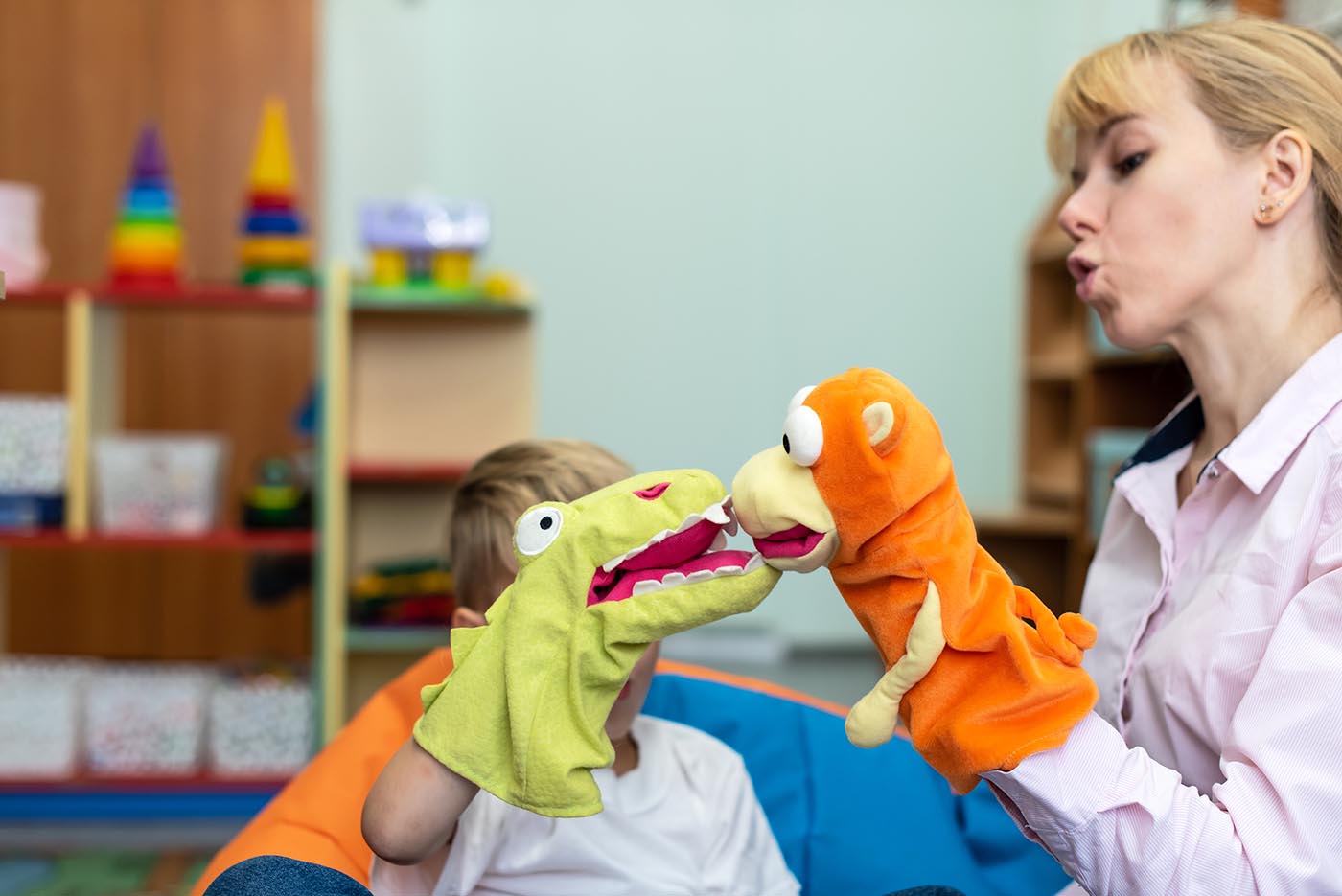
Play-based, naturalistic sessions for understanding, words, sentences and conversation.
Alternative communication (AAC)
Pictures, signs or devices so the child can communicate now. AAC supports, and does not prevent, speech.
Sensory & daily skills
Sensory regulation, feeding, dressing, fine motor skills and autonomy.
Body & coordination
Motor coordination, body awareness, imitation and joint play.
Emotions, behaviour & family
Emotional regulation, anxiety, behaviour that challenges, and support for parents and siblings.
Questions about your child’s communication?
Send us a message. We will guide you to the right first step, in Lebanon or online.
What the research says
Naturalistic, play-based approaches
A large meta-analysis found the most consistent benefits for naturalistic developmental behavioural interventions in young autistic children.
Parent-mediated therapy
In the PACT trial, parent-mediated communication therapy led to improvements in social communication that were still present about 6 years later.
Multidisciplinary diagnosis
Guidelines recommend a multidisciplinary assessment for autism diagnosis.
Unproven treatments
Restrictive diets, chelation or other unproven “cures” are not recommended and can be harmful.
School inclusion and families abroad
- Recommendations and meetings with the school for adapted support and inclusion
- Parent guidance online for families in the UAE, Qatar, Saudi Arabia, Kuwait and beyond
- Therapy in the family’s languages, so the child does not have to give up Arabic
- Regular reviews of goals as the child grows, from early childhood to adolescence
Explore

Scientific and professional sources
- Sandbank et al. (2020), Psychological Bulletin: Project AIM, meta-analysis of interventions for young autistic children
- Pickles et al. (2016), The Lancet: Parent-mediated social communication therapy for young children with autism (PACT), long-term follow-up
- NICE guideline CG170: Autism spectrum disorder in under 19s, support and management
- NICE guideline CG128: Autism spectrum disorder in under 19s, recognition, referral and diagnosis
- ASHA Practice Portal: Autism
What families say about us
Real Google reviews from families who worked with our team.


This organization enjoys high-level therapists, and they even develop every day to much higher levels as this field progresses.


Frequently asked questions
Who diagnoses autism at Happy Brain Clinic?
Our psychiatrist leads the diagnostic process, with input from speech-language, psychological, neuropsychological, occupational and psychomotor assessments as needed.
At what age can autism be diagnosed?
Signs can often be seen before age 2 or 3, and a reliable diagnosis is often possible from around age 2. Teenagers and adults can also be assessed.
Will my child speak?
Many autistic children develop speech, especially with early support. For others, alternative communication gives a real voice. We work on communication in all its forms.
Does using pictures or a device stop a child from talking?
No. Research shows that alternative and augmentative communication does not prevent speech and can support it.
Does speaking Arabic and English at home confuse an autistic child?
No. Bilingualism does not cause or worsen autism. Children can keep the family’s languages.
Can therapy be done online from the Gulf?
Yes. Parent coaching and many sessions can be done online. Diagnostic assessment is best done in person when possible.
Book an autism or communication assessment
In Tyre or online, in Arabic, English or French.