
How neuropsychology can help with ADHD in everyday life
Understanding an attention problem is useful when it leads to changes in daily life. At Happy Brain Clinic in Tyre (Sour), Lebanon, neuropsychological care connects an individual’s cognitive strengths and difficulties with the situations that matter at home, school, university or work.
From assessment to a practical plan
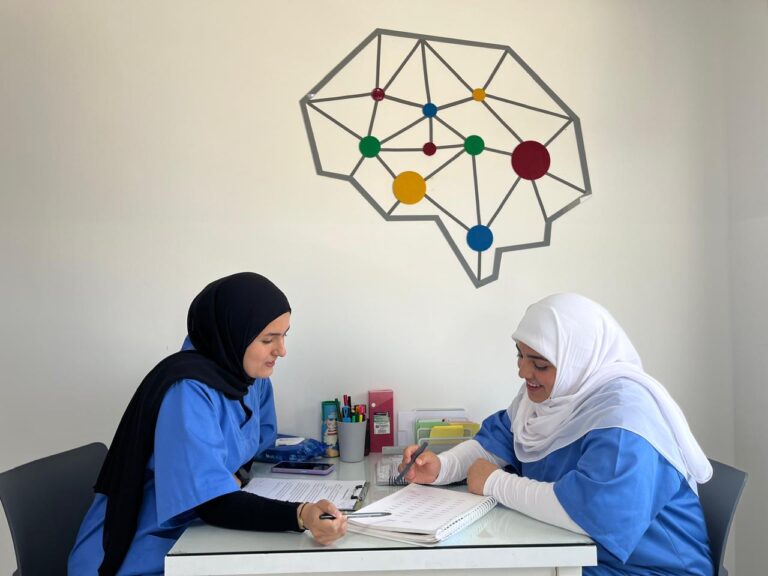
Tests are chosen for the referral question and interpreted with regard to language, education and background.
Ask
What is becoming difficult, and what would meaningful improvement look like?
Assess
Interviews, history, questionnaires and selected tests clarify attention, memory and executive-function needs.
Apply
Observable goals are chosen with the person, tried in the real setting and reviewed together.
What are executive functions?
Executive functions help us organize actions towards a goal. People with ADHD do not all have the same profile, so support should reflect the person’s actual challenges.
Beginning a task
Getting started without long delays or many prompts.
Keeping instructions in mind
Holding the steps in mind while acting.
Resisting interruptions
Staying with a task despite distractions.
Changing a plan
Adjusting when the first approach does not work.
Examples across the lifespan
These are examples of possible strategies, not a treatment prescription.
Child
Use a simple picture sequence to prepare the school bag with a parent.
Teenager
Break a homework project into steps and practise checking progress.
Adult
Set up one reliable system for appointments, deadlines and bills.
At any age
Try an environmental change, then check whether it helps in the real setting.
A goal might be to need fewer prompts in a morning routine or to complete agreed work steps more consistently. We choose observable priorities with the person and review them together.
What is the evidence, and where are the limits?
A team approach with clear roles
Our team is trained to support people with ADHD. Neuropsychology helps clarify needs and plan strategies; psychotherapy may address coping and associated emotional difficulties; psychiatric consultation can address diagnosis, co-occurring conditions and medication when appropriate. We coordinate care around a shared set of priorities.
Frequently asked questions
Does everyone need a full neuropsychological assessment?
No. The clinician recommends the scope needed to answer the question. Some people need targeted assessment; others need broader evaluation.
How many sessions are needed?
This depends on the question, assessment needs and agreed goals. The clinician explains the proposed pathway before work begins and reviews progress during follow-up.
Where do I start?
Tell us your age or your child’s age, the situations causing difficulty and your preferred language. An initial consultation can help identify the appropriate service.
Book a consultation at Happy Brain
Contact our clinic in Tyre (Sour), Lebanon. Tell us your age or your child’s age, your main concerns and your preferred language.
Related reading
Scientific and professional references
- National Institute for Health and Care Excellence (NICE). Attention deficit hyperactivity disorder: diagnosis and management (NG87), recommendations 1.3 and 1.5. nice.org.uk/guidance/ng87/chapter/recommendations
- Westwood, S. J., et al. (2023). Computerized cognitive training in attention-deficit/hyperactivity disorder (ADHD): a meta-analysis of randomized controlled trials with blinded and objective outcomes. Molecular Psychiatry, 28, 1402–1414. doi:10.1038/s41380-023-02000-7 pubmed.ncbi.nlm.nih.gov/36977764/